Saturday, December 12, 2009

A Serious Man

Kristin and I just watched A Serious Man with some degree of enjoyment. I equivocate because I still haven't really thought the film through (I'm somewhere about the first time Larry Gopnick calls Columbia Records Album of the Month Club). However, most of the film is what I've come to expect from the Coen Brothers, but it did get Kristin and I thinking about putting together a film retrospective. Here's my tentative line-up. If you notice something clever about a combination, of course it was my first thought.

  1. Burn After Reading and A Serious Man
  2. Intolerable Cruelty and Raising Arizona
  3. Big Lebowski and No Country for Old Men
  4. Barton Fink and O Brother, Where Art Thou?
  5. The Hudsucker Proxy and The Man Who Wasn't There
  6. Blood Simple and Fargo
  7. Miller's Crossing
I hope Kristin will not be upset that I broke up the big night featuring our favorite films back to back (Fargo, Miller's Crossing). I thought it was important to remember that the Coens are relevant (and still making movies) in large part because of Frances McDormand. Forgive me.

On to the list. The first night consists of the latest films, which I think are the same film or at least the same ending. The second night will be a date night, third night - westerns, the fourth night - a battle of Johns (Turturro and Goodman), and the fifth night on the dangers of industry. The sixth night will be all about Frances and the final night will be my favorite of bunch.

Submit your restrospective and let the 'dualing' begin...


Oh, and in honor of having finished teaching Russian film for the quarter, I will include a review for A Serious Man: Many movies deal with problems of society and families and this is interesting in A Serious Man.

Saturday, December 5, 2009

Zombieland


The walking dead should walk slowly. They should not run. Think of these corpses, raised from slumber by some unknown and incomprehensible force. They are new to this form of locomotion, and their muscles do not respond as expected. Wanton disregard for their own well-being has, in many if not most cases, caused them to sustain multiple injuries. Even if they feel no pain (and “zombies” do not feel pain in the way we do, although they may feel something), they cannot run on a broken ankle, or a torn achilles. Poor zombies.

But it seems zombies have been working out. More and more, the undead are portrayed as faster and stronger than the living humans they subsist on. These fast-moving flesh eaters can be scary in their own way, but they are more like the old monsters: werewolves, or yetis, or lions and tigers and bears. They are predators, and we can escape them through our superior wits and technology, but we cannot outrun them, because they are essentially the same beasts we have feared since we first stood up on two legs. Zombieland’s undead are decidedly in this latter category, the athletic undead.

What makes the living dead of the classic Night of the Living Dead scary is not simply the fact that have been reanimated. Nor is it their modified cannibalism (Question: is it technically cannibalism when they eat only the flesh of living humans and never each other?), although the images of vacant-eyed undead masticating arm muscle certainly produce some visceral reaction. The truly frightening—and new—thing about Romero’s undead comes from their weakness, the fact that individual zombies are so easily eluded or defeated. It does not matter that you can outrun the shambling corpse in the graveyard—and you certainly can—because there will be another near the car, or behind a tree, or looming up out of the darkness in your front yard. There will always be another.

That Zombieland features zombies who run is a failure not of Zombieland itself, but of the entire zombie genre to which it is a response. Zombieland is a movie about zombie movies, and in the cultural contest between high-speed, Danny-Boyle—style undead flesh-eaters and the lumbering living dead of Night etc, it is pretty clear that the scarier and more interesting slow zombies have already lost. Zombieland is the proof, because Zombieland exists in a cultural setting where an explanation of the plague—what caused it, how it spread, where it started—is almost irrelevant, and certainly unnecessary. Everyone knows what a zombie is.

Zombieland is not a bad movie. Every aspect of the film does what it means to do; it is funny, romantic, gory, smart. The performances are strong, especially one awesome (and often spoiled, but far be it from me…) cameo. Here is Jesse Eisenberg, still playing the same thoughtful, neurotic descendant of some hybrid of Woody Allen and Holden Caulfield that he has been playing since he was tiny (and here I am again, sort of liking him in spite of the fact that I was sure I had heard enough stories about how hard it is to be a smart, introspective, adolescent white boy growing up in middle America). And here is Abigail Breslin, who no longer looks like a little girl, trading one-liners with Woody Harrelson.

Like in the superior Shaun of the Dead, the zombies in Zombieland are mere background, in this case for a family road-trip action comedy (sort of like a National Lampoon’s Summer Vacation, with automatic weapons). Unlike Shaun of the Dead, Zombieland has no rough edges. It is slick and fast and full of self-confidence. Maybe that is the difference between the zombie movies Zombieland is responding to and the Romero family of zombie movies (which SotD is about); Romero gleefully explores a crazy idea, while the fast-zombie movies are sardonic and a little smug, and their underlying idea is ultimately safe.

For lovers of Night of the Living Dead, there is something sad about Zombieland. It feels like a nail in the coffin of the thing Romero invented, which was maybe the first new thing in horror in a century. The shambling, slack-jawed, vacant-eyed animated corpse that feeds on the flesh of the living, that can be killed with a shotgun blast or a good solid blow to the head, that can be outrun by any child, but can never be defeated because the one thing this threat requires to keep coming is the one thing we will never stop providing: more corpses.

Sunday, November 8, 2009

Sauna

Finland is creepy. Beautifully creepy. Sauna is the story of two brothers, Eerik and Knut, who are mapping the borders between Finland and Russia after the Russo-Swedish War (1590-95). Eerik has served Sweden since he was sixteen and now bears the weight of the 73 souls taken during his time as a soldier. Knut is the aspiring professor mapping the borders for the empire in hopes of receiving work at the university back in the capital. Their small party of Russians and Finns encounters a village in the middle of a swamp (home to 73 souls, no less) not yet found on any map. The town is shrouded in mystery (no history, no children, no monks to fill the cowls that have been left lying around), at the center of which is a sauna.

For those of you not used to life in the Great White North of Europe, this isn't your typical gymnasium steam room. In medieval Finland, the sauna is the place where the recently born and the recently deceased are taken to have the past and their old sins washed away. A long bath for a man with 73 (or is it 74?) dead muddying his soul.

I don't know why I found Sauna so appealing. Most likely my nostalgia for the swamps off the Gulf of Finland, permanently overcast, steel-colored skies, and humid sub-zero temperatures were the cause. However, the novelty of the film's plot and setting impressed the neophyte horror fan in me. The time and place are long ago, but this isn't the gothic horror of Dracula and the Catholic Church. Finland is barren and empty. There aren't any churches or beasts to fill your nightmares, just the remnants of pagan belief and a porous border between the natural and supernatural. The film shows how terrifying it would be to live in an isolated, frozen wasteland even without the gore-dripping dead bodies that haunt Eerik and Knut and I think that that's why the film works. There is little in the way to make the audience jump or squirm, but you feel a little colder and a little lonelier with each passing minute.

Part of me hopes that there is more to come from Scandinavian horror as both
Sauna and Sweden's Let the Right One In have been enjoyable alternatives to the stale horror films I know.

Saturday, October 31, 2009

Season of the Witch

Am I the only one who will be singing this damn song all day?


Definitely the best of all the Halloween movies, Halloween III: Season of the Witch is senseless and unscary, but its goal--redefining the Halloween franchise as a Creepshow/Twilight Zone/Night Gallery style serial horror anthology--was an admirable one. For one thing, if it had succeeded, it would have spared us endless Michael-Myers-centric sequels, and even the John Carpenter fans among us (a.k.a. Charlie) have to admit that would have been a good thing. Of course, it did not succeed. No one is arguing that it succeeded.

Anyway, Happy Happy Halloween! Silver Shamrock!

Wednesday, October 21, 2009

Carrie (1976)


I just rewatched Carrie last week. The weird part about watching Carrie is that I always forget about the whole telekinesis thing. I know it's sort of at the center of her character, but the images that stick with me from the movie are almost completely independent of the paranormal aspect of the story. For me, you could edit out the light-bulb-bursting, knife-hurling, door-slamming parts and have the same movie, or maybe a better one. The scary stuff is partly in Sissy Spacek's face, and mostly in Piper Laurie's intensity.

I suppose we're meant to view Carrie as a revenge movie. The popular girls mistreat the weird high school outcast, but they don't know who they are dealing with, so they get roasted alive in the gym. In fact, the gym scene comes off as very silly, while the scenes between Carrie and her crazy Christian mother remain unsettling and sometimes scary (okay, sometimes silly too).

Or is it just me? Is it just that I am terrified of weird Christians? (This would explain the time when Kristin and I were at Blockbuster in Urbana, and I was like "We should rent The Exorcism of Emily Rose! It's so scary!" And then we asked the guy behind the counter, and he was like "Dude, have you seen that movie? It's not even a horror movie. It's like, a courtroom drama. No, we don't have it." Sort of as if he had personally tossed it in the dumpster to save customers from having to watch such an unscary movie.)

Tuesday, October 13, 2009

Homework assignment...

After a long night of sulking and self-loathing, I was told I should write something about the women and horror class I'm taking to honor the blog's origins and the month of horror, October. What I would like to write about my class isn't fit for this blog as I respect the elevated discourse established by the writers and readers who contribute to the site. There is also my fear that any criticisms leveled at established academics will come back to haunt me at my future tenure defense.

Horror is a rather problematic genre for me mostly because I'm a snob. I hate the hokiness (hokeyness?), the gore, the predictability of the plot, but really what I hate is the idea that what I see on the screen should scare me. Heart attacks scare me, unemployment scares me, but a ridiculous puppet devising over-wrought methods of execution ala the Saw franchise does not scare me. Part of me realizes that this is my own shortcoming as a cultural critic and I hope to one day see just why horror is so good. The other part of me is shaking its head at that statement and wonders why this blog post isn't on Peter Greenaway's brilliant film about landscape drawing, The Draughtman's Contract.

Appropriately enough, my first horror review will be on one of the most cliched of all October films, Halloween. Today's in-class screening was the film that put Carpenter on the map and gave hundreds of scrappy, independent upstarts the incentive to make shitty movies. But what can I say about Halloween that hasn't been said in the film's nine 'sequels' or the dearth of scholarship written about the film or by people who put 'John Carpenter' in the same sentence with 'Alfred Hitchcock' when discussing great filmmakers? After racking my brain for minutes, I sadly came to the realization that perhaps Halloween should be dearer to me than I originally thought.

My favorite 'low' genre has always been comic books. Nerdy kids like to read and mostly we like to read about muscle-bound heroes with super powers that have earned the trust and respect of everyone around them. Namely, characters who represent everything we aren't. However, comic books see fit to mock their fanbase by having Captain Pectorial spend 30 pages using brute force to beat his foe, guy with brain/mental/doctor/professor/science in his name. To sum up, guy I want to be constantly beats up guy I am and I love him for it. But more on my self-loathing in a moment.

Ignoring the theory of the 'final girl' and gender studies for just a moment, I'd like to think about the film's views on education. Laurie escapes horrific death not because she's a frigid virgin, but because she's a nerd and smart people survive (to remain virgins) in the world of horror movies. What frightens Laurie early in the movie? Leaving her chemistry book at school and therefore losing scholarships that would get her a better education and thus a better job. Well, she doesn't come out and say that but a nerd knows a nerd by any other name would still dread bad grades. And who does Michael Myers kill? People who run rampant over the English language using 'totally' as flippantly as people today use 'literally.' And what greater confirmation do we have for the endorsement of education than having a doctor act as the arbiter of justice filling Michael Myers full of lead. That's right, a paunchy, bald guy with no less than three degrees gets to save the day. Is that me on the screen? Am I finally a hero?

So, thank you, John Carpenter but not for turning nerds into knights and finally giving me my place in the sun. That theory has more holes in it than any ten of your films. No, thank you for letting the horror-hating guy I am take a beating from the horror-loving guy I'd like to be. You've so brilliantly recreated my relationship to comics that I might have to give this horror thing a try...

Monday, October 5, 2009

Happy Birthday, NTC


It's been a year...

Monday, September 14, 2009

Sukiyaki Western Django

You want to hear a funny story about Takashi Miike?

Once upon a time, when I was a naive young movie snob, I had never heard of Takashi Miike. I was happy. I lived in a little house in a little town, across the street from my best friend, Dave. One Sunday, as I puttered around, looking for something to do, my friend crossed the street for a visit. "I can't stay," he said, "but I brought you something." He handed me a dvd he had burned. "Kristin and I watched it. I think it's...artistic." Then he left, and I looked down at the dvd in my hand, at the handwritten title: Audition.

When people hear this story, people who have seen Audition, they are amazed that Dave and I are still friends. They question my judgment. Sometimes they question whether I should still be friends with Kristin, since she could probably have known, and warned me.

Later that day, after I had watched the movie, Anna came to visit, and I remember her look of concern when she saw my face. "Are you okay?" she asked. Well, no, not really.

Audition might not be the scariest movie I have ever seen, but it definitely belongs on a short list of the most disturbing. Audition sneaks up on you (I can only speculate, but I suspect this would be true even if you knew its reputation beforehand), because the story is so ordinary, and then suddenly, without warning, extraordinary.

I don't really mean to talk about Audition, but the truth is that having seen a few (maybe half a dozen) of his myriad films, I still always think of Audition as the Miike yard stick, because Audition does so well what it sets out to do, which is cause anxiety.

Sukiyaki Western Django does not aim to disturb. It belongs somewhere in the family of genre-exploding films, playing on the themes of B-westerns, but very much in the Tarantino mold* (as opposed to, say, the Kurasawa mold, or the Coen bros). This sort of film (Kill Bill, Death Proof), smirkingly points out that what we are dealing with is a traditional form, and leaves it at that. After watching these movies, a person doesn't come away with the sense that something has been said about that tradition (in this case, the western). If you love westerns, it is probably entertaining enough to recognize the homages and roll with the formula, and allow the movie to make up in style what it lacks in substance.

I guess Sukiyaki Western Django does what it sets out to do. I'm just not sure that what it sets out to do is all that interesting.

*and with his participation, including a quite hard to watch recurring cameo

Sunday, August 23, 2009

Generic...


As the perhaps only person on this blogspot to go see Tarantino's newest film, Inglorious Basterds, I felt a certain obligation to write something about it. I'll leave better bloggers for what will no doubt be better films (Avatar), and humbly accept my fate as the lone Tarantino fan.

My normal defense for Tarantino's output rests almost entirely on his attention to the history of popular/pulp genres, and his suggestion that there is high art in the low brow. Jackie Brown, Kill Bill, and Death Proof reevaluated the importance of seedy cop dramas, poorly dubbed kung-fu features and car-chase films in the context of the history of cinema. Vanishing Point may never make it to Criterion's ranks, but Tarantino does present a compelling argument as to why it should not be immediately disregarded.

So why then does Inglorious Basterds fall so short? At first I thought Tarantino was a director so entrenched in the film making of the 1970s, he was ill-equipped to handle a "period" piece. Though Samuel L. Jackson narrations over Shaft-esque action sequences missed the mark in this film, they were at the least mildly entertaining. Ultimately, what fails this film is what has made so many Tarantino films so good: attention to the trappings of genre. When Tarantino wants to make a film, he consumes every film that might remotely resemble the anticipated project and plucks from each one a shot or a scene that gives the genre relevance. With a genre like car-chase films, you've got 5-6 films to work with and it creates a need for attention to detail to find the diamond scenes amongst the glass. Now Tarantino has nearly 60 years of films to choose from, and as you guessed he didn't want to leave one out. The movie itself is a reference to a 1978 film released under a similar title (this might illuminate part of the problem) but the citations don't stop there. Le Corbeau, The Great Escape, A Bridge Too Far, Saving Private Ryan, and most of the Leni Riefenstahl films make an appearance. The end result is a film with the most abhorrent nazi villain (Christoph Waltz is wonderful, wunderbar, merveilleux and meraviglioso), complex issues dealing with who is an enemy and a circus of bizarre antics that just don't fit (midget painters, Mike Meyers, etc.).

As this blog post is needlessly longer than it should be (emblematic of its subject at 153 minutes), I want to close on the film's lone saving grace. Tarantino's film challenges how genres don't seem to work over time. The war films of the 1940s aren't much like the war films of the 1950s and even less so when compared with films of the 1970s. Yet they are all found in the same section of your local video store clumped together without only the war as their unifying factor. As time goes on, we get films like Inglorious Basterds, a clear descendant of the genre but with a lineage we might expect of a true bastard: related but we don't know how.

Friday, August 21, 2009

Julie and Julia

Julie and Julia was not our first choice for our inaugural Richmond movie experience. Of the movies currently playing, the only ones we really wanted to see were Humpday and The Hurt Locker, but they started too early. (I sort of thought moving to a bigger city would give us more choice in movies to see in the theater, but it turns out the same twelve movies are just playing at twenty different locations here.)

I can't help thinking of Julie and Julia as two different movies.

Julia

It is maybe redundant to even bother mentioning that Meryl Streep is a brilliant actress, but I can't help saying it again, because Julia Child is an impossible role. Everything about Mrs. Child was so huge: her personality, her height, her voice -- oh man, that voice. Who could play Julia Child better than Dan Akroyd? What I mean is, a perfect portrayal of her would almost have to play like a caricature. And that's how I felt at first. But then. I was convinced, and then I was drawn in, completely. Sincere, mature love stories are rare in the movies anyway, and this one is unconventional in many ways.

Oh, and Jane Lynch! It might be the most serious role I've seen her in (Or the first? Does Joyce Wischnia count as a serious role?), and she was perfect. There is this moment at the wedding, an overhead shot, that could have been cheesy, but it wasn't quite cheesy.

Julie

First I should say that I agree with everyone else on planet earth that Amy Adams is delightful and charming and adorable and everything. From Junebug to The Office to Enchanted to the recent Night at the Museum movie, she always seems to stand out, often as the only thing on screen worth paying attention to at all.

But this movie, the Julie half of Julie and Julia, I just can't get behind it at all. The characters keep talking about how narcissistic and selfish Julie is, but then they go on to reward and praise her narcissism. She talks constantly about how she was supposed to be a writer, but really, who thinks sloppy online babbling is writing? (To paraphrase Capote: That's not writing, it's blogging.) Seriously, is there anything more pointlessly unoriginal than writing a completely derivative blog, whose stated purpose is solely to respond to the creative work of someone else?

Jeez, fictional Julie Powell, get a life.

Monday, July 20, 2009

The Wizard of Oz (1939)


I thought seeing The Wizard of Oz at the Buskirk-Chumley Theater would be a perfect end to the Bloomington chapter of my life. I love seeing movies at the B-C. I love movies from the 30s. I was a card-carrying member of the International Wizard of Oz Club in 1995. I love the fact that the theater has started showing old movies on Sunday afternoons, instead of Tuesday afternoons (I had to skip work to see Rear Window a few months ago). So I was very excited to take a few hours out of my busy stuffing-things-into-boxes schedule last Sunday, buy some tea and chocolate at Farm, find a seat in the familiar back right corner of the house. But I forgot one thing.

I HATE The Wizard of Oz. It's just awful.

To begin with, Judy Garland is way too old to play Dorothy. It's weird to see her stuffed into that little pinafore and bobby socks, pouting through the songs like the grotesque grown-up Baby Jane Hudson.

I don't even like the music that much. I know, "Over the Rainbow" is a classic, one of the greatest songs in the history of the movies, etc. It is impossible for me to evaluate whether I think it's a good song because it is so overplayed. I suspect its resonance is strongly tied to the creepiness of Judy Garland, tragic woman-child.

The main thing I hate is the movie's sense of humor, the way Burt Lahr makes these cringe-inducingly weird faces, the way Frank Morgan is this understated straight man by comparison. It's not like I don't like physical comedy - I do. But I don't think Ray Bolger is particularly good at falling down.(There is exactly one joke in the entire movie, which is when the Tinman repeats "Oil can" and the Scarecrow says "Oil can what?" That's pretty funny.)

But it's not just bad in a vacuum; The Wizard of Oz is hurting my movies. I am almost sure it's the most widely watched movie from the 1930s . So I'm afraid that when people think of Old Movies, nobody remembers the breath-taking glamor of an Astaire/Rogers dance number, nobody thinks of Eric Blore's comic face-making. Instead, they think of this shiny mess. Which is depressing.

Now, if you want to see Frank Morgan overact, please go watch The Shop Around the Corner.

Thursday, July 16, 2009

Cue the soft focus, hardcore....

Collars...Baby Face is a story about collars. The Great Depression left most of America in a state of financial ruin with only a person's collar as an effective mark of your station in life. Barbara Stanwyck's role as Lily Powers (aptly interpreted by Lydia in words I won't use here) shows the rise and triumph of a woman who claws her way out of a collarless (think so poor that they can't afford a collar, let alone a choice of blue) factory town to the mink-lined big city life.

Or it's about Nietzsche.

The uberfrau in question learns the hard way that to get ahead means to give...up any sense of moral compass and move beyond good and evil. "Exploit men," becomes Lily's rallying cry as she moves up the corporate ladder through the corporate bedrooms and sleeps her way to the top of the Trenholm banking empire (represented by the long pan up the side of a NYC skyscraper showing the various offices where Lily does her duty). With every new floor comes a new man, new apartment and new collar, which suggests that all in all her actions aren't without benefit. I mean, look at this collar. I'm pretty sure it's platinum.

But let us not forget a cameo by John Wayne, Chico the "fantastic colored girl," and all of the crassness that makes this film disgustingly enjoyable. Every soft focus close-up of Stanwyck with her 'come-hither-into-this-lady's-room' look and every raunchy jazz riff reminds us that the generation of our grandparents was nothing if not obsessed with sex. After all, Lily sleeps with SEVEN (count them in the final montage) men to get what she wants. And what is it that she wants?

The dressless collar...

Guest reviewer: Mogwai


Mogwai covers her eyes in response to "He's Just Not That Into You"


Tuesday, July 14, 2009

What Kristin Thought of The Baxter

Hi Kristin,

You asked me to watch The Baxter, so that you could shamelessly adopt my opinion of it as your own. Okay.

Here is what you thought of The Baxter. You liked a lot of things about it, especially the classic zany comedic performances of both leading actresses. And don't get me started on how much you loved the little 1940's dresses Michelle Williams kept wearing. You sort of hated Michael Showalter, but then you've always sort of hated him, ever since The State. Remember when you used to watch The State on MTV when you were in high school, after all those years with no TV? Michael Ian Black is so cute and funny. He reminds you of Maisie when she's like "Let's be serious." You should be following him on twitter, if you're not already. He's so hilarious. Also, Rob Cordry.

Even though the writing was weirdly uneven (the scene with Peter Dinklage as the wedding planner, for instance, caused you to alternate wildly between rage and mystification), you could appreciate what the film was trying to do. The romantic comedy from the perspective of the guy-not-taken, a sort of Rashomon for the whole romcom genre. But it never really decided whether Showalter was the Perfectly Nice Guy who doesn't get the girl (Ralph Bellamy in, oh let's say, His Girl Friday would be a good classic example) or The Wrong Guy who deserves to lose because he's so mean/stupid/sexist/dorky/etc. In the first scene, voiceover explains that a Baxter is a perfectly nice guy, who never gets the girl. But by the end of the movie it seemed that a Baxter was simply a person who is being rejected at the moment, and this annoyed you slightly.

As always, you thought Paul Rudd was adorable (although of course he'll never top his finest performance).

Now please tell me why I like Joe vs. the Volcano.

Thanks,
Lydia

Tuesday, July 7, 2009

Star Trek

(Wrote this a long time ago, forgot to post it...)

There is something a little cheap about returning to the beginning of a franchise - remember in Episode One, when R2-D2 showed up, and you knew that there was just so little substance to the movie that they decided to pack it instead with misguided nostalgia? That's a danger of prequels.

Well, Star Trek is all nostalgia. Every fifteen minutes, you meet another character you already know. Lots of lines got big laughs from the opening-night audience I saw it with, and I assumed that the ones I didn't recognize were were also in-jokes for the Trek fans who made up a large portion of the audience.

I'm not saying I didn't enjoy watching the movie. I did. Every actor impressed me. Because I think they are better actors than the original cast (well, the one obvious exception is Leonard Nimoy, who is about the same. No, maybe a little better, although he seems to have a bit of a denture problem? Am I making this up? It seems like he's always afraid his teeth are going to fall out) and they managed to play these characters we all already know, and be true to the original, but take themselves seriously, but not too seriously. Also, Chris Pine is very pretty. And he's in a zombie movie that's coming out this fall.


Note: Nokia = Bazoomercom

Thursday, July 2, 2009

Drag Me To Hell

Drag Me To Hell looks back on an era when horror movies worked through creepy moods and shakes, rather than (just) fake blood and prosthetics, and it's largely successful at doing so. Better, it vacillates between scenes that are genuinely suspenseful, if not really ever unsettling, and the kind of slap(st)ick Raimi is so known for, over the years, resulting in the same kind of confused mishmash that made Evil Dead II so wonderfully deranged.

Although Drag successfully captures the innocence-gone-wrong feel of the Seventies horror films (partly because they appear to have actually told the set designer that the movie was set in 1978--the protagonist even has a sunburst clock on her wall!), it fails to match the depth of the best of them. Rosemary's Baby is about the terrible experience of being unexpectedly pregnant the devil's baby, sure, but more than that it is about the terrible experience of being unexpectedly pregnant. Nothing in Drag Me To Hell ever has any resonance with the rest of life.

Unfortunately, although Drag successfully captures the strange mixture of approaches that made EDII insanely great, it fails to update the formula in any meaningful way.


Had it been made in 1978, this would have been a great movie. Drag looks back on a high point of the horror genre...but it says nothing more than "weren't these great?". And they were, but they're already there. It's not clear to me what the need was for a new one. Unfortunately, Drag provides little more. This movie was well worth seeing. It's probably one of the best movies I've seen this year. But in the future, if I want to watch an intelligent, creepy horror, I'll watch The Stepford Wives, or Alien. If I want the perfect mix of goofy and gorey, well, I'll watch The Evil Dead II.


Tuesday, June 2, 2009

Terminator Salvation

For whatever reason, I enjoyed the newest Terminator movie. I went on a very hot day, and I paid $5 to get in, and I guess all I really wanted was some big explosions and some cool/scary machines (and some ice cold movie theater air conditioning).

But it's a pretty terrible movie. It doesn't make any sense. Here's one example. Spoiler alert. You know that scene in every movie, in which we think the hero is dead, and then someone administers CPR and even though he's been dead for twenty minutes, he perks right up? In T4, the hero in this scene is a human-cyborg hybrid* and a CG Arnold Schwarzenegger has some trouble killing him, until he realizes that his weakness is (you'd never guess...) his human heart, at which point the terminator reaches into his chest and crushes his heart with his bare hands. John Connor subsequently administers CPR to his completely crushed heart and he comes back. Cut to scene in desert, where we learn that Connor's heart is bad. He's going to die, we find out from his wife (who between T3 and T4 has changed from Claire Danes's sassy veterinarian, to Bryce Dallas Howard's, apparently, Greatest Heart Surgeon in the History of the World). He can be saved, but only by a heart transplant. Dramatically, the human-cyborg hybrid (who's heart was just crushed by a terminator, remember?) offers his heart. Everyone is very moved.

One more thing: How and why is it that Terminator ladies have gone from ordinary to amazing to senseless and spunky to quite literally barefoot and pregnant in the course of these four movies? Sure, B Howard's Mrs. Connor is a magically skilled physician, but she's also a simpering whiner throughout most of the movie. I might have forgotten, but I don't think she even holds a gun. (I mean, not that holding a gun is the only measure of toughness. Um.)

* Note: But aren't they all human-cyborg hybrids? With the human skin that gets them through the time travel and so forth?

Friday, May 22, 2009

dave, on Star Trek

"What have we gotten out of Star Trek for the last decade? Ever since TNG, it's just a bunch of pretty successful reboots. It's like they're running Windows 2000."

-Dave

Saturday, March 28, 2009

Junebug


I finally saw Junebug. I liked everything about it, except that I find it hard to believe that a man who does woodworking as a hobby only owns one screwdriver.

Tuesday, March 24, 2009

Watchmen

When I walked out of Watchmen I thought it was, eh, fine. Visually, very true to the novel, but I have never actually finished the novel. I thought, I'm not really the target audience.

But as time goes by, I notice my response has become more and more negative. By the end of the week, I will become enraged at the mere mention of the film.

These are some of my questions.

When Rorschach drops articles in voice over, I like it, because he's reading from his journal, where people often use shorthands ("Dead dog in alley today" vs "I came across a dead dog in the alley today..." or something. Or whatever). When he does it in dialogue, it sort of makes him sound like Cookie Monster.

Do these people have some sort of superpowers or not? I thought they didn't (obviously with the exception of Dr. Manhattan) but they appear to. I mean, if I'm supposed to understand the story as a critique or dismantling of traditional superhero notions, why do I still have to accept that they will win every fight (or be just fine after plummeting two stories in a flaming building) for the simple reason that they are the protagonists?

Why are so many of the thugs who get beaten to death in bloody slow motion Asian? Is it because we won the Vietnam war?

Am I meant to feel any sympathy at all for Holis Dan/Nite Owl or Laurie/Silk Spectre? I find them so entirely repellent, from the visually unsettling scene in which they balletically beat a group of thugs to death with their bare hands to the even visually ickier scene in the hovercraft, of which the less said the better.

Actually, I take that last part back. I think the sex scene was my favorite part of the movie, because it was the only time I knew where I stood, which is neck deep in irony. From the soundtrack (can you tell I'm rolling my eyes right now?) to the utter lack of chemistry between the actors, it's embarrassing and kind of hilarious.

I don't know, maybe I'm wrong. Lots of people liked it. (Charlie? Prove me wrong? That's what the comments are for...)

Tuesday, March 17, 2009

Fringe

Butterflies are creepy and intimidating. I've always thought so.

I just decided to catch up on Fringe, having missed the last six or so episodes. The first scene I see is this poor guy lacerated to death by a herd of sharpened butterflies.


I feel so vindicated.

Also, does this amazing sweater have an Intarsia color-work killer whale on it?


Sigh.

Wednesday, March 11, 2009

Happy-Go-Lucky

Let me just say right now before I start in on all my thoughts about Mike Leigh and what has happened with Mike Leigh over time, that I'm deeply in love with Sally Hawkins. I love her pretty face and her funny teeth and that odd twitchy thing she does with her breath. I loved her in Fingersmith, and in Persuasion, and even though I might have forgotten she was in Tipping the Velvet, I am sure I loved her in that as well.

In Alma, Michigan, where I went to college, there were just two pathetic video stores (in one, I had a fight about The Godfather with the clerk and was too shy return), but the Alma College Library had one wall of amazing movies. This is where I discovered a delightful movie called Life is Sweet, which introduced me to the following: David Thewlis, Jim Broadbent, Timothy Spall, Jane Horrocks (maybe you remember her as Bubble on Absolutely Fabulous? If you are reading this and you have not seen Little Voice, please go add it to your queue right now) and Mike Leigh.

Early in his career, Mike Leigh made a bunch of movies (many for TV) that were just about perfect as far as I'm concerned. In particular I am thinking of Meantime and Life is Sweet -- these little movies expose the ordinary lives of ordinary people, most of them middle class or poor, who are naive and optimistic, cheerful, pathetic, racist, charming, sincere, conniving, funny, tired. The dialogue is mostly improvised, and the actors are amazing - Meantime was one of very first movies of both Gary Oldman and Tim Roth, as well as Alfred Molina. I loved these movies because they made me see both the good and the bad in ordinary people, and they left me feeling hopeful, believing in a sort of basic humanity that could make life worth living. This sounds like hyperbole, but it's pretty much how I feel.

Then I saw Naked, or rather, started to see it. Naked is a weird exploration of sex and power and rape, and it's probably a good movie, but I just wasn't compelled enough by the story to endure all the horrific images. So I turned it off. Since then, Mike Leigh has made a lot of other quite good movies, and I have seen some of them: Vera Drake, Topsy Turvy, Secrets & Lies. The ones I've seen have been solid movies, but sort of weighty and important. None of them have been, for me, quite the revelation those earlier movies were.

Happy-Go-Lucky is the Mike Leigh movie I have been waiting for. There is no major conflict/conflict resolution, no Big Issues, just an almost (but not quite) impossibly optimistic person, living her pretty good life. It is a two-hour defense of cheerfulness. When you meet Poppy, you might think she is not a great teacher, because you might think she is a pushover, who gets by on charm with her students and everyone else. Poppy's classroom is chaotic and colorful. But when it comes down to it, when someone (her driving instructor, Eddie Marsan) pushes her too far, she is very capable of drawing a line, always with compassion.

The only weak point in the movie is a way-too-easy scene with a counselor (/love interest), who psychoanalyzes a young boy in about ten seconds flat. "Why are you angry? Draw me a picture. Why is your mother's boyfriend in a different room? He hits you? That's not very nice." But even that character subsequently won me over with his awkward first-date flirting.

I've just discovered that a BUNCH of Mike Leigh's early movies are instant-watchable on netflix. This is very good news.

p.s. You can watch a tiny fuzzy version of Meantime right now: http://www.youtube.com/watch?v=BgFLbDkXeuQ

Thursday, February 19, 2009

Dollhouse

I watched Dollhouse. I was able to see the conversation Joss had when creating it.

ELIZA DUSHKU: I need wear hot outfits. But how will I do it?

JOSS WEADON: Let’s make a witty show full of great dialog.

ELIZA: But will that show me off in hot outfits enough? Will the Dialog distract?

JOSS: You may be right. What about a straight-up action show?

ELIZA: I will wear hot outfits, right?

JOSS: Sure. But it will be on FOX.

ELIZA: How will that affect the hot outfits?

JOSS: Have you seen what they’d done to Summer Glau on Terminator?

ELIZA: … Let’s do it.

I’ll keep watching it, because I have know that dude can write. I just wish he had done this with Quantum Leap.

Monday, February 16, 2009

W. (2008)

Oliver Stone's habit of mining the recent and familiar for his fictionalized histories requires a leap from his audience. I think that the strengths of W. become clearer if it's viewed as an alternate history, if we pretend for a couple of hours that we're from a calmer, saner universe where George W. Bush was only ever the son of a President, a semi-public figure of fun, instead of a world-historical fuckup. Imagine, we say, just imagine what would have happened if Dan Quayle had become President! Or Jesse Ventura! Or worst of all George W. Bush! Someone that feckless and callow and lazy—what dystopia would reign!

Stone presents Bush (Josh Brolin) in scenes from throughout his adult life, moving back and forth through time as we see how his formative experiences and demons and flaws shape his actions. These scenes, mostly, are intensely personal: and, while they present Bush, especially younger Bush, as a grotesque, they are careful not to damn him for that; Brolin plays him with such confidence that he becomes a preternatural charmer even through the slouching and loudness and mouthfuls of food. Two scenes at the beginning neatly lay out the Bush dynamic: one, a golden moment on a baseball diamond where Bush receives full and absolute adoration from the crowd before he throws out the first pitch as President; the second a fraternity hazing where Bush is seen to be a peculiar interpersonal genius. Bush craves love but will accept deference; and if he cannot compete in the world of ideas and reason he will resituate all his problems from there to the realm of personal connection where he is nigh unrivaled. Bush's struggle for the respect of his father (James Cromwell in a nice performance of some heavy-handed scenes) is the key to this dynamic: GHWB seems to be the only person who both refuses W. affection and does not fall for his charms; in Stone's telling, it is approval from this distant father that motivates the striving of an unfit man for office but is not enough to overcome shallowness and incompetence.

Of course W. would not be an Oliver Stone film without a little wackadoodle read on l'affaire Bush, one he here situates within the national security apparatus of the administration. These scenes are where the feel of alternate history comes in; the odd impressions and recontextualized quotes identify this as parodic; the murderous absurdities calmly dropping from the mouths of Cheney and Rumsfeld and Wolfowitz reminded me of nothing as much as Dr. Strangelove. Most of these criminals don't come off well, of course: Colin Powell (Jeffrey Wright) gets the best treatment, with his Iraq war arc being presented as tragedy-lite; Condi Rice is shown as less conspirator than enabler, though Thandie Newton's distracting impression makes her thoroughly a figure of ridicule. Karl Rove, wow: Rove is not only a villain, he is a malevolent corrupt elf; casting Toby Jones here is one of Stone's most interesting choices in the whole film.

Throughout the film, we come, as we expect, to feel sympathy for W. He's a man wholly out of his depth, whose personal psychodrama became treasonous only because of the family into which he was born. His interpersonal instincts are so right that he cannot realize that his intellectual instincts are so wrong; in manipulating those around him to give him love (or deference, that Splenda to his soul), he opens himself up to their manipulation to war. But those very scenes with his advisers and cabinet pull us back out of any sympathy. The jarring satire reignites our anger at regular intervals. Nixon was part tragedy, part Grand Guignol, but the character was given an amoral macabre dignity. Bush's dignity, hinted at in the sympathy Stone give to his rise through life, is utterly undercut by the clowns by which he is undone; and we in our alternate universe laugh at the criminals and cringe at Bush, thinking What a bullet we dodged, then, didn't we?

Friday, February 13, 2009

The Best and Worst Lesbian Movies

I found a blog post of the “Best. Lesbian. Movies. Ever.” So, I have taken that list and separated it into MY list of best and worst lesbian movies. It seems I disagree with a lot of the movies on this list. It’s also important to note that the definition of lesbian movie is basically “any movie with girl on girl action no matter how insignificant or traumatizing”. Still, I left “Boys Don’t Cry” and “Monster” off the list.

BEST LESBO MOVIES


But I’m a Cheerleader: This movie is just flat out funny, no matter who you. Plus, the ladies love Clea Duvall.

If These Walls Could Talk 2: Cuz deep down inside, I think Chloe Sevigny is SO hot as a butch dyke.

Imagine Me and You: This is just a sweet movie. And Anthony Stewart Head is really cute and funny in it.

Gia: This is the first time I saw (and subsequently developed a crush on) Angelina Jolie. It’s also a solid movie.

Tipping the Velvet: The movie is better than the book, in my opinion. And I just love Nan King. She’s kind of my cross-dressing idol.

Saving Face: This is such a good movie and it’s so much more about familial relationships than lesbians. And I like that.

D.E.B.S.: Super campy and fun. Plus Holland Taylor is in it. What’s not to like?

Lesbo Movies I didn’t Hate:


Bound: I really like this movie a lot. However, Gina Gershon’s character is named Corky. Instead of being sexy, it makes me laugh every time. Just imagine Jennifer Tilly saying “Oh Corky” in that breathy voice. It’s hysterical.

Better Than Chocolate: It’s pretty cute but the acting and the story leave a something to be desired. Same as…

The Incredibly True Adventure of 2 Girls in Love: this movie has a young Laurel Holloman playing a character named Randy Dean. It’s good and terrible all at the same time.

Loving Annabelle: This is a story about a student and a teacher developing a romantic relationship. I’m not sure why the lesbians like this movie so much. Sure, there’s some girl on girl action but I’m not actually supposed to think this is okay, am I? The movie is not so bad though.
Desert Hearts: I think this movie is probably really good if you have better taste in movies than I do.

All Over Me: This movie wasn’t good enough to capture my full attention but it’s worth it to see a young Leisha Hailey rocking out.

WORST LESBO MOVIES:


Kissing Jessica Stein: I liked this movie when it came out. Hell, I even own this movie. However, the more I watched it the more I hated it. Maybe I would like it better if Jessica hadn’t ended up with a dude in the end. Or at least not that dude. I don’t know.

High Art: Did you like this movie? I couldn’t even make it through the whole thing. Another movie that ladies love that I just don’t understand.

Lost and Delirious: OMG. Worst. Lesbian. Movie. Ever. Mischa Barton is even in it which totally proves my point.

Gray Matters: I take it back. This is actually the Worst. Lesbian. Movie. Ever. Here’s the plot: A brother and sister are best friends. They are so close, people actually think they’re dating. The sister is a total lez but doesn’t realize it. They fall for the same girl (who subsequently falls for the brother) and the sister spends the rest of the movie trying to sabotage them. SO bad.

Itty Bitty Titty Committee: I’m really supposed to like this movie. It was even written and directed by the same woman who did “But I’m a Cheerleader” which is one of my favorite lezzie films ever. Alas, I’m not riot grrrl enough to like this movie. I actually thought it was totally boring.

Chasing Amy: This movie wasn't listed on the blog post I found. Still, I wanted to get it on here because I really think this movie is awful. When I was 17 and had never seen girls kissing in a movie before, I loved this flick. Then I got older and was slightly embarrassed for liking it so much. It's just so unrealistic that any lady-loving lady would fall for Ben Affleck. It wasn't believable in Gigli either. But that movie was just one of the worst movies ever made. Period.

Lesbo Movies that I have Yet to See:
I have no opinion on these movies but I plan to see them one day.

Rescuing Desire

Laurel Canyon

Fingersmith

Foxfire

Puccini for Beginners

Wednesday, February 11, 2009

Dear Movie Stars, Please Make More Funny Movies

I'm just gonna go right ahead and say it. I hated Lost In Translation. For one thing, I'm sick of movies about how hard it is to be a really successful middle aged dude with several hot women in love with you. It's probably a good movie. Whatever. It's boring.

It's not as if I don't like Bill Murray, or even didn't like him in this role, he was fine. I just wish he was making more funny movies, because I think really good comedic acting is rarer than really good dramatic acting. I miss Dr. Venkman.

I think of this as a common and sad phenomenon. People make funny movies, then they go on to prove themselves in some serious role, and then they do only serious and/or Important movies. But then I started making this list, and it seems like I might be wrong. Steve Martin may take himself too seriously as a writer, but he still mostly acts in (ostensibly) funny movies. Adam Sandler and Jim Carrey (neither of whom would be on any top twenty list of my favorite funny people in the first place anyway) have both done some serious stuff, but they've kept on making "funny" movies too.

So here's my whole argument:


This is awesome.


This is lame.

Saturday, February 7, 2009

a little whining about Tropic Thunder


I'm trying not to be Oscar obsessed but the more I think about it the more I'm baffled/angry about Robert Downey Jr's nomination for his performance in Tropic Thunder, a role that comprises exactly one (admittedly well-played) half-clever joke, mostly at the expense of the Academy. It's distressing to think of the level of not-addressing-the-problem indicated by giving a goddamn statue to a goddamn white dude. I thought RDjr was very funny/satirical/clever/interesting/etc in that movie, don't get me wrong. I just think it's lame to honor gimmicky crap, but it's beyond bizarre to do so when the gimmick in question is blackface. BLACKFACE. Somebody explain to me again how this is about racism and therefore not...racism.

Wednesday, February 4, 2009

Pride and Prejudice (2003)


I noticed right away that there was something off about this modern retelling of Pride and Prejudice, but I should have known what it was, and I didn't. For one thing, if I had noticed the subtitle: Pride and Prejudice: A Latter-Day Comedy, that might have clued me in. Also, I could have read the synopsis which describes this Lizzie as a student at Brigham Young University. I did not notice that. I just noticed as I watched the first few scenes that the film seemed oddly clean, everyone soap-opera shiny and talking in this sort of wooden way, as if they were reading off cue cards.

When Lydia (not me, the character, in the movie, the slutty one) said "You're not going to be ready for the party" and Lizzie said "What party?" and Lydia said "You should pay attention in church" - that was my first clue. I thought, "Oh! It's Christian." Then someone mentioned that they were in Utah, and I finally understood. It's not just Christian, it's Mormon. I guess if you're making a new version of a novel which is very familiar, and which has been adapted a ton of times, the best way to go about it is to do something new and unexpected. And I really wasn't expecting LDS, despite all the clues. So I guess that's something.

Film versions of Austen's novels are thick on the ground, and I'm always a little wary of a new adaptation - what are you going to add? Clueless stands out, because it is based on Emma, but not awkwardly so - Clueless does not constantly remind you that it is Austen. It is very possible to watch Clueless and never know that it is based on Emma. This Pride and Prejudice on the other hand constantly refers to its Austeniness, with odd intertitles from the novel (e.g. "A fortnight passed..."-Pride and Prejudice), as well as lifted character names and occasional bits of dialogue. As a movie, Pride and Prejudice is pretty lame. But I'm interested in the fact there is a production company making movies "by Mormons, about Mormons, and for Mormons." I like the idea of little movie companies that make little movies for specific audiences. It should encourage diversity and innovation, in general. So I guess I approve.

Wednesday, January 21, 2009

Best and Worst: Stoner Movies

BEST

1. How High (starring Method Man and Redman): "How did I fail women's studies? I love bitches!"

2. Half Baked (starring Dave Chappelle): When I was 17 it was hysterical to watch Bob Saget talk about sucking dick for crack. Plus, have you ever watched Jon Stewart? Yeah, but have you ever watched Jon Stewart on weed, man?
3. Harold and Kumar Go to White Castle and/or Harold and Kumar Escape from Guantanamo Bay(starring Kal Penn and John Cho): 3 Words- Neil Patrick Harris.
4. 9 to 5 (starring Jane Fonda, Dolly Parton and Lily Tomlin): Remember when Violet's son gave her a "marijuana cigarette" for her birthday? Good stuff.
Honorable Mention- Pineapple Express (starring James Franco and Seth Rogen): James Franco is so cute. I just want to pinch his cheeks! But, overall, this movie is too violent to make my "Best of" list.

WORST

1. Puff, Puff, Pass (starring Danny Masterson and Mekhi Phifer): This movie contains a running joke about the movie "The Shawshank Redemption" that's kind of funny. But, at the end of the day, anal rape just isn't funny. Not one bit.


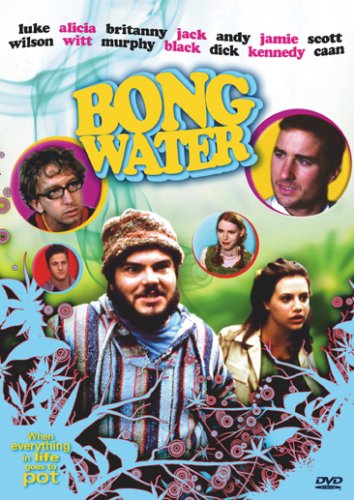
2. Bong Water (starring Luke Wilson and Brittany Murphy): the most boring, whiny stoner movie ever made.

Honorable Mention-Smiley Face (starring Anna Faris): I really like Anna Faris and this is a Gregg Araki film and I think he's OK. But the main character is flakey and irresponsible in a way that isn't cute or endearing at all and even a cameo by Jane Lynch didn't help me like this movie.

p.s. I saw Milk again

So watching Milk the second time confirmed that I disagree with what everyone is saying about it. I liked Sean Penn less the second time, and liked the movie more. And I would like to bake James Franco a cake, he's so pretty and talented. I think Sean Penn is Just Fine, not Completely Amazing.* And I think the movie itself is fascinating in ways nobody is talking about. e.g. that thing where the imagined conversations are explicitly undermined. There is a framing scene, with Harvey and Scott (Penn and Franco) in bed eating cake on Harvey's birthday. We see it very near the beginning and again right at the end, but the two versions are different, as if to remind us that while parts of the story are heavily documented, other parts are necessarily made up. I think Milk is the most honest biopic I've seen, because it's explicit about its failures. Or something. I can't stop talking about it!

* A discussion point: I wonder if playing a celebrity of recent memory is nearly impossible to do perfectly, but it is easy to do well. That is, anyone could play Bob Dylan and get a "wow, she really sounded like a dude" reaction. But almost no one can play Katherine Hepburn in a way that is both like KH and interestingly textured on its own.

* Another discussion point: Rated R for language, some sexual content and brief violence. Milk has a brief but traumatic scene of violence (no blood), a fair amount of foul language, and a teeny tiny bit of sex, aka "some sexual content." Does the sexual content get mentioned by the MPAA only because it's boy-on-boy?

Thursday, January 15, 2009

The Women (2008)

How terrible is Diane English's remake of George Cukor's classic 1939 comedy The Women? It's pretty terrible. About ten minutes into The Women, I wanted to pause the movie and take a few minutes to list stereotypes about femininity and female life, so we could check them off as they occurred in this movie.

Here are a few of the most revolting, puzzling, and offensive moments. Those of you who have seen it (why?), please feel free to disagree or add to my list.

1. Jada Pinkett Smith plays The Black Lesbian (doubling up on your tokenism is so economical!) and early in the movie she has a conversation with Debra Messing in which Messing asks why there are so many lesbians now, the implication being that JPS is gay because it's trendy. JPS agrees, pointing out that women are better lovers than men because they don't leave the toilet seat up. Huh?
2. When Meg Ryan's character is having an emotional crisis, she eats a stick of butter. It's probably the most striking image in the movie, evoking my strongest emotional response (revulsion).
3. A remarkable fact about The Women (1939) is that it has a cast of all women. Set in places inhabited in the 1930s largely or only by women - a salon, the dressing room of a high-end department store, a divorce ranch in Reno - the story sets out to examine relationships among women. In the remake, the cast is still (with one glaring exception, which is in the final irritating scene..but no spoilers) all female, but senselessly so. In this movie, scenes take places in public streets and for no apparent reason there are no men walking down those streets. It is a strange distortion of the relatively interesting gimmick on which the original story was built.
4. Another weird change from the original that bothered me: Silvia Fowler (Roslalind Russell/Annette Benning) is weirdly softened in the remake. In both cases, she's extremely shallow, but in the 1939 version she's catty and heartless and shallow, while in the remake she's just unbelievably thoughtless. Norma Shearer's Mary really has no reliable friends but her mother and her daughter. Meg Ryan's Mary forgives and forgets a lot. Too much.
5. This is in no way unique to The Women but when we rewatched the 1939 version after watching the new version, I was again struck by how unpleasantly thin leading ladies are these days. Perhaps it was to disguise her painful gauntness that Meg Ryan (a fashion designer) is dressed in horizontal black and white stripes in almost every single scene.
6. I do not have enough time to list the cliches. Like when Messing had to leave a reception because ohmygod her water just broke. Or when JPS is so grossed out by childbirth (she's a lesbian, see?). Or when Meg Ryan EATS A STICK OF BUTTER.

(Photos: Meg Ryan looks completely scary. Norma Shearer decorates a garden for some reason.)

why we needed our own blog

3:13 PM me: why do people like movies I don't like????
Kristin: which movie?
me: doubt
Kristin: hm. who?
3:14 PM me: these guys I usually like, from filmspotting
they're talking about how brilliant and complicated this movie is
and I thought just the opposite: why???
Kristin: well, remember when it was cool that michael reviewed cloverfield and didn't slam it?
3:15 PM me: yes
Kristin: maybe it's like that.
me: but
Kristin: except
ha!
he didn't call it brilliant.
he liked it for what it was.
me: right
and not only did he not call it brilliant, he didn't call it brilliant for all the exact same reasons I thought it was lame
3:16 PM Kristin: right
me: he didn't talk about how brilliant and innovative it was to use hand held camera
how he was astonished because no one has ever done that before
he didn't talk about how subtle and clever it was to cut back and forth between the two stories
Kristin: well, i can't answer your question, but i will say this is the reason we needed our own blog.